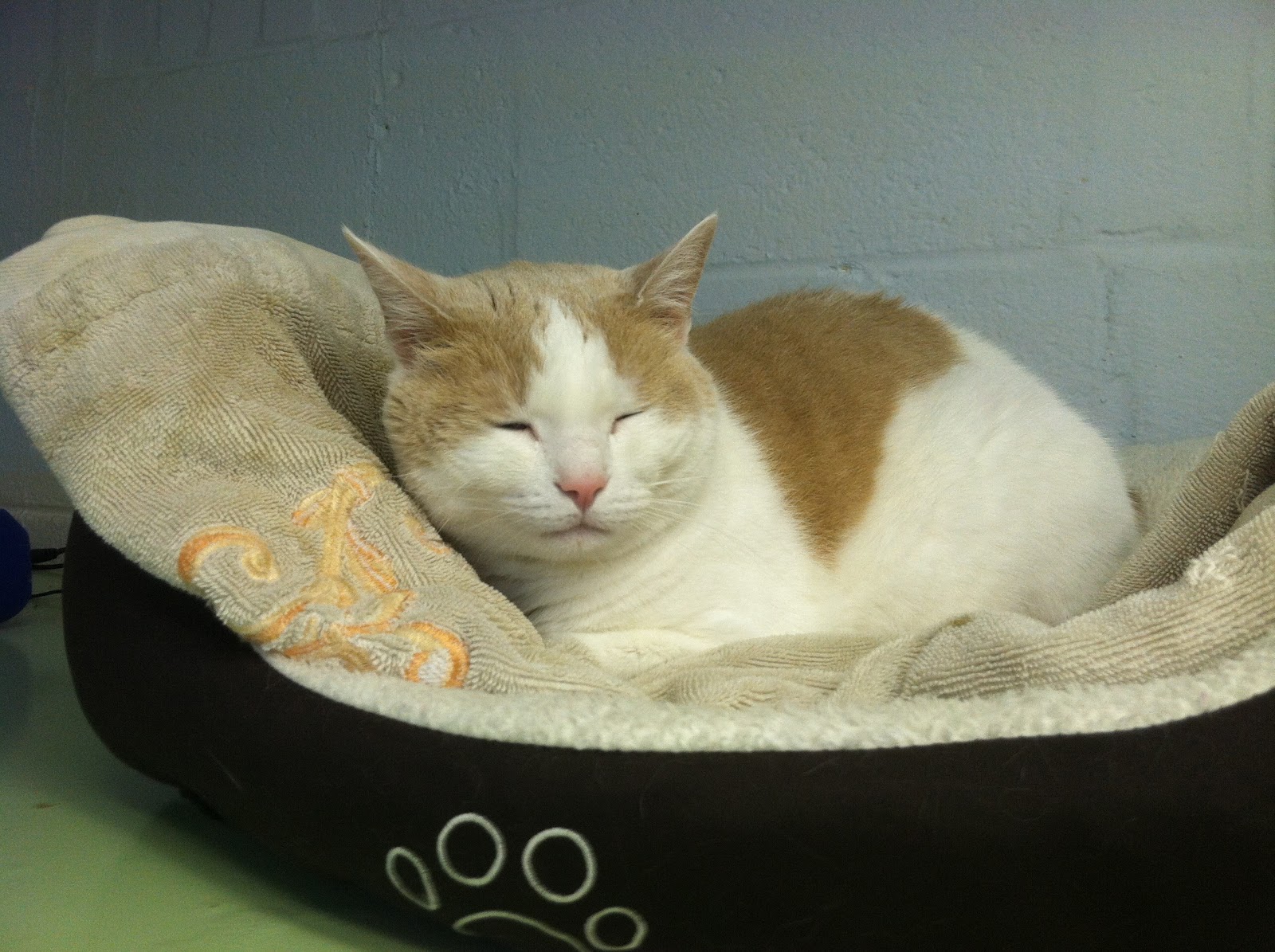
I've been thinking a lot lately, and I feel we should discuss a topic very close to my heart: Feline Health Care. Did you know that there's still this misconception that cats don't need regular health care? That your cats don't need to be seen but every 3 years when their vaccines come up due, or don't need to be seen at all except for when there's a problem? Well, I'm here to say that you feline friends need to be seen by a veterinarian at least once a year, and twice if they have health issues or are older.
I know you're thinking, "But, Mason, I can't catch my cat to bring him in!" or "My cat never goes outside and so she doesn't need to be seen." Cats are the wildest of our domestic pets and it is their instinct to hide illness until they absolutely can't. Some cat owners bring their pet to our office in very dire conditions, guilt-ridden that they didn't realize it needed care. And there's also the opinion of cat owners to consider - there's a very "Town Mouse, Country Mouse" view of how cats should be treated, as either outdoor or barn cats, or as house cats who live in relative luxury. Any animal, no matter how big or how small, deserves to be in good health!

According to the American Veterinary Medical Association (AVMA), here are some facts regarding feline health check ups.
- More than half of owned cats (52 percent) hadn’t been to the vet within the past year.
- Older cats see vets less often than younger cats do.
- Meanwhile, 95 percent of veterinarians believe cats should receive annual checkups, and 72 percent believe that wellness exams are the most important service we provide.
- And get this: Only about half as many cats get annual checkups as dogs.
A Number of Contributing Factors
1. The economic impact of the recession. The study was conducted during the height of the economic downturn.2. Fragmentation of veterinary services. Lots of choices in veterinarians and specialists can be confusing and can actually interrupt access to vet services.
3. The use of the Internet versus office visits. Lots of cat owners seek help in inexpensive places first.
4. Feline resistance. Cats don’t like going to the vet.
5. Perception that regular medical checkups are unnecessary. Veterinarians aren’t always very good at communicating the importance of regular vet visits.
All of that makes sense! But that still doesn’t explain why cats receive less care than dogs do. After all, all of these causes could be applied to the case of dogs, too. Which is why I think this issue is less to do with economics and more about why cats garner less attention than their canine counterparts.

Even if your cat spends most or all of its time indoors, it may still be at risk for certain preventable viral diseases. Your veterinarian will assess your cat’s risk and develop a vaccine protocol tailored specifically to its needs.
Cats are prime targets for parasites such as fleas and ticks, not to mention the ones we can’t see like heartworms (which are spread by mosquitoes) and intestinal parasites. Your veterinarian will discuss the best options to keep your cat free and clear of these dangerous pests.
Dental disease isn’t just for dogs—cats are susceptible, too. Your veterinarian will examine your cat’s mouth and determine if further action, like a full oral health assessment and treatment under anesthesia, is needed to keep your cat’s teeth and gums in good shape.
Just as your cat needs to be physically healthy, it needs to be emotionally healthy, too. Your veterinarian will ask questions about your cat’s environment—whether there are other pets or children in the house and how your cat interacts with them, what kind of playful activities your cat participates in, and so on—and inquire about any behavioral issues that need attention.

So, I highly recommend that cat owners everywhere try their best to bring their cats in to a veterinarian at least once or twice a year! Our health is just as important as dogs' health, plus we tend to keep it a secret from you - being proactive and taking felines in regularly will help eliminate emergencies and surprises!
Til next meow,
 |
Mason |
Great Falls Animal Hospital
703-759-2330
POISON CONTROL HELPLINE
PET POISON HELPLINE: (800) 213-5774
ASPCA POISON CONTROL: (888) 426-4435
24 EMERGENCY FACILITIES
THE LIFE CENTRE- Leesburg: (703) 777-9968
VCA SouthPaws Veterinary Specialists & Emergency Center Fairfax: (703) 752-9100