Showing posts with label dogs. Show all posts

Friday, January 9, 2015

Winter Woes - Eternal Sunshine of the Busy Mind

Mason, here - It has been a while!  I was trying to hibernate through the fall and winter, but these pesky humans who work at the hospital won't let me sleep; they are continually making noise and looking at other cats and dogs (and let me tell you, I'm not very keen on sharing my space).  So, since it's now the New Year and my beauty sleep is on forced hiatus, I figured I would share more of my knowledge with you!


Let's talk about winter, or more specifically, being shut indoors all winter.  It can be very, VERY boring to stay inside all the time with nothing new to do (which is why I was trying to hibernate).  But there are ways you can keep you indoor-bound companions in tip-top shape and their minds sharp as a tack.  I learned long ago that mental exercise can be satisfying to bored, bounce-off-the-wall pups and cats.  Most breeds of dogs were developed to work (like Corgis, Sheepdogs, German Shepherds, and Terriers to name a few), and many dogs today are not expected to fulfill that inherent trait. Giving dogs a job to do is good for them, and they like it! (much unlike cats such as I, who prefer to sleep a lot and keep to themselves).

There are many tricks that you can teach your dog to help them work for their treats, and it also reinforces discipline and good behavior.  I know someone who taught their dog to balance a biscuit on his nose, then flip it into the air and catch it on command. Now that's a heck of a parlor trick!  He also knows to bark on request, shake hands and even find his plush toys and put them away.  Try starting with a simple game and build on it.  If your dog likes to retrieve, begin with simple in-sight fetching and then slowly make things harder.  Add a "stay."  Then "hide" the toy in an easy-to-find spot, making the game a little trickier as your pet learns you want him to "find," instead of merely "fetch."

Every trick, whether useful or just plain fun, was born on a gloomy winter afternoon.  You can also use search games, where you can hide a toy and ask your dog to find it.  For even more mental stimulation, see if your dog can find the right object by name - Kong, frog, football, and so on.  Such games are to dogs what the daily crossword puzzle or the latest computer game is to us.  Dogs have to think, they have to learn, and when they get it right, their sense of accomplishment and joy is palpable and contagious.  And as fun as these games are, with plenty of praise for a job done right, they also reinforce a dog's place in the pack structure we humans call "family."


If bored and lonely, many animals will develop any number of bad habits. They dig holes in the yard or carpeting, bark or cry endlessly day and night, and become chewers of  furniture, shoes, or pillows.  And sometimes, without the socialization all pets need, they become aggressive and moody, ready to bite or snarl at anyone who comes into their territory.  So it's important to keep up with your pet's personal growth and socialization in winter time!  Just don't let them sit around doing nothing.  You'll all enjoy a bitter winter day better if you find your dogs something useful to do! 

 Now, this isn't just a matter for the dogs in your life - birds need exercise, too!  From the smallest budgie to the largest macaw, parrots are highly intelligent, active birds who need to stay mentally and physically active to stay healthy.  Anything a parrot can dig into, from a toy to a challenging food that requires effort to eat, is good.  One toy in particular is good for burning the calories consumed by a sedentary bird: the coiled-rope perch.  This springy invention requires effort to stay on, and some birds become so enamored of it that they'll spend hours bouncing up and down.  Human interaction is a huge part of animals companions' well being and growth, so take those birds out and let them stretch their wings, meet your visitors, watch some TV with you, or run little obstacle courses in the open!

Another thing to remember with birds is that many of the birds kept as pets are of species most comfortable in places that we would find intolerable: the steamy, hot rain forests of Central and South America.  The dry air of human homes - especially in winter - is thought to be a contributing factor to feather-picking, a frustrating syndrome that can drive birds to pluck themselves bald.  Many birds enjoy being dampened by water from a spray bottle or being offered the chance to take a bath in a shallow dish of clean water.  How often should birds get a bath? There are no firm guidelines, but daily would be fine with many of our feathery friends.

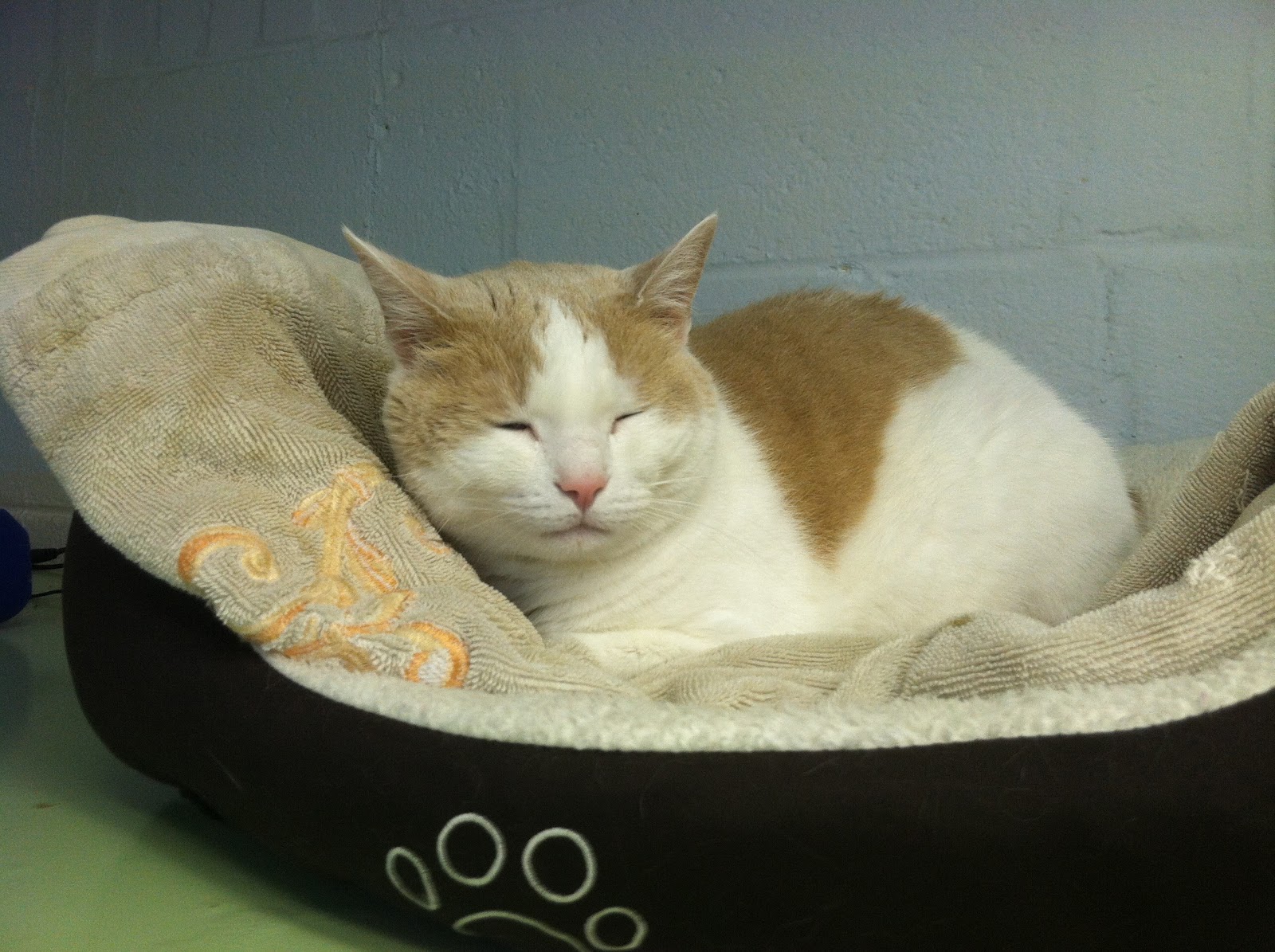
And, of course, when it comes to your feline friends, there's no better way to spend a day indoors than this:


No stimulation is "technically" necessary, though we do like a fun game of "Catch the Laser Dot" or playing with feathered devices and whatnot to keep ourselves looking svelt.

So, remember, while the winter is woeful with all its bitter cold and nasty weather, you can still enjoy the indoors with your pets and give them something fun to do to keep them healthy and social!  After all, your pal Mason here would never steer your wrong...right?

Til next meow,


MASON


Great Falls Animal Hospital

703-759-2330
POISON CONTROL HELPLINE
PET POISON HELPLINE: (800) 213-5774
ASPCA POISON CONTROL: (888) 426-4435

24 EMERGENCY FACILITIES
THE HOPE CENTER- Vienna: (703) 281-5121
THE LIFE CENTRE- Leesburg: (703) 777-9968

Tuesday, June 3, 2014

Do We Love Our Dogs More Than Our Cats?

Hello, all!  Mason here, checking in with you for another newsletter!
 
I've been thinking a lot lately, and I feel we should discuss a topic very close to my heart: Feline Health Care.  Did you know that there's still this misconception that cats don't need regular health care?  That your cats don't need to be seen but every 3 years when their vaccines come up due, or don't need to be seen at all except for when there's a problem?  Well, I'm here to say that you feline friends need to be seen by a veterinarian at least once a year, and twice if they have health issues or are older.
 
I know you're thinking, "But, Mason, I can't catch my cat to bring him in!" or "My cat never goes outside and so she doesn't need to be seen."  Cats are the wildest of our domestic pets and it is their instinct to hide illness until they absolutely can't.  Some cat owners bring their pet to our office in very dire conditions, guilt-ridden that they didn't realize it needed care.  And there's also the opinion of cat owners to consider - there's a very "Town Mouse, Country Mouse" view of how cats should be treated, as either outdoor or barn cats, or as house cats who live in relative luxury.  Any animal, no matter how big or how small, deserves to be in good health!


According to the American Veterinary Medical Association (AVMA), here are some facts regarding feline health check ups. 
  • More than half of owned cats (52 percent) hadn’t been to the vet within the past year.
  • Older cats see vets less often than younger cats do.
  • Meanwhile, 95 percent of veterinarians believe cats should receive annual checkups, and 72 percent believe that wellness exams are the most important service we provide.
  • And get this: Only about half as many cats get annual checkups as dogs.
So what’s up with that?

A Number of Contributing Factors

1. The economic impact of the recession. The study was conducted during the height of the economic downturn.
2. Fragmentation of veterinary services. Lots of choices in veterinarians and specialists can be confusing and can actually interrupt access to vet services.
3. The use of the Internet versus office visits. Lots of cat owners seek help in inexpensive places first.
4. Feline resistance. Cats don’t like going to the vet.
5. Perception that regular medical checkups are unnecessary. Veterinarians aren’t always very good at communicating the importance of regular vet visits.

All of that makes sense!  But that still doesn’t explain why cats receive less care than dogs do.  After all, all of these causes could be applied to the case of dogs, too. Which is why I think this issue is less to do with economics and more about why cats garner less attention than their canine counterparts.


So, why should you bring your cat in for check ups regularly?  Even if your cat seems healthy on the outside, an underlying problem may be lurking on the inside.  Fecal exams, blood and urine tests, and other tests that screen for infectious diseases, such as feline immunodeficiency virus (FIV) and feline leukemia virus (FeLV), may be required, based on your cat’s age and lifestyle. 

Even if your cat spends most or all of its time indoors, it may still be at risk for certain preventable viral diseases. Your veterinarian will assess your cat’s risk and develop a vaccine protocol tailored specifically to its needs. 

Cats are prime targets for parasites such as fleas and ticks, not to mention the ones we can’t see like heartworms (which are spread by mosquitoes) and intestinal parasites. Your veterinarian will discuss the best options to keep your cat free and clear of these dangerous pests. 

Dental disease isn’t just for dogs—cats are susceptible, too. Your veterinarian will examine your cat’s mouth and determine if further action, like a full oral health assessment and treatment under anesthesia, is needed to keep your cat’s teeth and gums in good shape. 

Just as your cat needs to be physically healthy, it needs to be emotionally healthy, too. Your veterinarian will ask questions about your cat’s environment—whether there are other pets or children in the house and how your cat interacts with them, what kind of playful activities your cat participates in, and so on—and inquire about any behavioral issues that need attention.


So, I highly recommend that cat owners everywhere try their best to bring their cats in to a veterinarian at least once or twice a year!  Our health is just as important as dogs' health, plus we tend to keep it a secret from you - being proactive and taking felines in regularly will help eliminate emergencies and surprises! 


Til next meow,


Mason


Great Falls Animal Hospital

703-759-2330
POISON CONTROL HELPLINE
PET POISON HELPLINE: (800) 213-5774
ASPCA POISON CONTROL: (888) 426-4435

24 EMERGENCY FACILITIES
THE HOPE CENTER- Vienna: (703) 281-5121
THE LIFE CENTRE- Leesburg: (703) 777-9968
 
 
http://veterinarymedicine.dvm360.com/vetmed/data/articlestandard//vetmed/182014/842022/article.pdf

Tuesday, January 29, 2013

Brrr! It's cold outside!

Happy Mew Year everyone!! I realize it’s been awhile since my last blog and I apologize.  I decided I needed some time to de-stress (since being a cat is tough) and took a nice long vacation to the green exam room.  It was everything I thought it would be; mostly because it looks the same so I knew how it would be but it was amazing nonetheless.  Nothing terribly
exciting in my world, though I started to put treats towards my 401k.  I can’t even fathom my senior years without them and I refuse to go back to selling catnip on the side.

Mason all snuggled up for winter
Speaking of things I can’t fathom, what is the deal with this below freezing weather we’re having?  I personally need heat and do not appreciate that I am unable to look out the window because Mother Nature is bitter.  You and I both know that this weather can be quite hazardous and unforgiving regardless of how many legs (or lives) you have.  So what am I hinting at you ask?  One of my favorite places to go for more information about my health, www.veterinarypartner.com, has an article appropriately titled, “Winterize Your Pet”.  I think a lot of humans assume that because we have an excess of hair that it gives us superpowers that prevent frostbite or hypothermia.  They assume incorrectly; I know for a fact that cats that were given the superpowers that are geared more toward intelligence operations, not temperature control.

While keeping your pet indoors during the cold winter months is ultimately the safest way to keep your pet happy and healthy; I understand there are a few out there who do love the great outdoors.  Here are some tips from Veterinary Partner to “winterize your pet.”

1. “You must provide adequate outdoor shelter. Animals must be able to get out of the elements.”  Bottom line, if you aren’t able to provide the proper protection from all kinds of weather then your pet shouldn’t be outside.

“A pet must have a well-insulated structure just large enough so that he can curl up  Inside to maintain body heat.  The structure should also have a wind-block to protect it  from wintry blasts. In the coldest parts of the country, it should also have some sort of outdoor-rated pet heating pad or other device.   And be sure that there's always a supply of fresh, unfrozen water by using a heated bowl.”

2. “Animals who spend any significant amount of time outside will need more calories during cold weather.  Food is fuel, and they'll need to burn it to stay warm.”  It should go without saying that you need to provide the right amount of food for your pet daily.  Every pet is different, just as every diet is different in its own way.  Although the instructions on the food bag may serve as a guideline; it can be hard to trust since some companies out there want you to feed more so that you buy more.  My advice is to speak with your veterinarian to discuss your pet’s individual dietary needs.

3. “Remember to thump on your car's hood on cold mornings.  You neighbor's cat may be nestled against the engine for warmth, and thumping your car's hood will get the animal to skedaddle to safety.”  It may sound ridiculous but it could ultimately save a cat’s life (and your conscience!)

Winter doesn’t necessarily only affect pets that go outdoors.  It can be uncomfortable for indoor pets as well.  Pets with any kind of joint pain, arthritis, history of sprains or fractures or of course pets who may not be as blessed as others when it comes to fur coverage may find winter to be very uncomfortable.  Thinking about your pet’s individual needs during the winter (any season really) is the way to go.  If you think your pet may be suffering from joint pain or other ailments that may make them uncomfortable, please speak with your veterinarian to determine what you need to do to ensure comfort.  (Keeping them at a healthy weight is also key to helping with joint issues!) Spoil them a little and maybe get them a heated bed for underneath a blanket.  They’ll thank you!! 

Last but not least, don’t be afraid to fit your pet with a coat or sweater if needed.  according to www.veterinarypartner.com, “Some animals really can use the extra insulation of a well-fitted sweater: older pets, and dogs who are tiny (such as Chihuahuas), or who are shorthaired and naturally lean (such as greyhounds or whippets).  Overcoats can save you time drying your dog if you walk in inclement weather, especially if your pet's longhaired.  And don't forget to wipe your pets' feet, legs and belly after they've been outside to keep the animal from ingesting any de-icing solutions.“  Hear that last part folks?  Keep all the pitty-pats safe outside and provide protection for paws that are exposed to de-icing products!  Most pet stores should carry booties/shoes made for pets and you can also find a large assortment online. Still have questions or concerns?  Give us a ring!  That’s what we’re here for!

For more information, visit www.veterinarypartner.com. In the meantime,

STAY WARM!! :D


Mews & Warm Snuggles,


Mason

[Although I am highly intelligent, I must give credit where credit is due. The information I am sharing with you can be found at  http://www.veterinarypartner.com/Content.plx?P=A&S=0&C=0&A=2837
]

Thursday, August 30, 2012

Back to school

Ah, I can hear it now…  parents around the country singing a nice celebratory song about the kids going back to school after a nice, long summer break.  Who may not be celebrating?  Your furry friend who has grown accustomed to having the extra company around. 
Mason checking his blog
For many pets, the separation may be a bit depressing but manageable.  After all, we really have no concept of time other than “FEED ME NOW, I’M HUNGRY” o’clock.  There are however a good number who definitely need more than a promise of “See ya in a few hours, buddy!” and may require something a bit more extensive.
Dogs and cats can be fairly resilient but there are situations where not every animal reacts in such a stoic manner.  Things that may not seem like a big deal to us can throw a wrench in your pets’ daily routine.  Going from a house full of people during the day to peace and quiet can actually be quite a stressful event, hence where separation anxiety could come in.  We don’t understand “work”, “school” or “vacation” and can see your absence as abandonment.  I think this applies more so to dogs, as they tend to be more social and involved in daily routine.  Separation anxiety can manifest as anything from depression to incessant barking to destruction; anything in the dog’s reach can be considered fair game, whether it’s shoes, furniture or floor.  Not only can this be a big issue for your belongings, but it can be hazardous to your dog as well.  Dogs don’t discriminate when it comes to chewing or destruction and can end up ingesting something harmful, whether a foreign body or chemical.  It’s a good idea, regardless of whether or not separation anxiety is an issue, to pet-proof your house.  You may need to use a crate while away to avoid any surprises.  Now how do you know if your pet is acting out due to anxiety or another issue?  According to an article on VeterinaryPartner.com, here are a few things that may indicate that your pet is missing your presence:
1)       Your pet is extremely attached to you or someone in your household.  (I’m not just talking about being a “BFF” as you humans call it, but a pet that constantly follows the owner and becomes agitated or upset when that individual leaves.)
2)      Destructive or inappropriate behavior happens when pet is by him/herself at home and unsupervised.
3)      Exits or barriers, such as doors, gates, etc. are targeted for destruction.
4)      Your pet’s anxiety seems to start within a half hour of the individual leaving.
5)      With dogs, they may have a high pitched yelp or bark repeatedly.
If you think that your pet could be experiencing this or any other behavioral issue, please get in touch with us as soon as possible.  We can discuss different options based on your individual situation and your pet’s needs, whether it be trying medication (for your pet, silly…) or behavior training.   Addressing issues before they become a big problem, even if they may seem small, is definitely the way to go.  Don’t let yourself or your pet suffer unnecessarily! 
Now speaking of suffering unnecessarily, I am in desperate need of a snack, a pet and a nap!  Enjoy the remainder of your summer two and four legged friends and have a safe, happy Labor Day!
Meows,
Mason

Friday, August 10, 2012

Mason's Mewsings on Intestinal Parasites

Happy August everyone!  This summer sure did fly by.  Sorry I’ve been lacking with my words of wisdom however I took my own little vacation to another exam room just to get away for a while.  The seclusion was fantastic, though it got rough at meal time on occasion since I wasn’t sprawled out on everyone’s papers emitting sad pleas for food.  It really is hard to be me sometimes.
Mason's at nap time
Today’s topic is the fascinating world of intestinal parasites.  Those two words together just sound really icky and they definitely are exactly that!   When your vet recommends having your pet’s stool checked at least once a year, believe me, it’s not because they love poop.  Dogs and cats often pick up intestinal parasites outdoors; however, it can happen inside the home too.  While keeping cats strictly indoors is a much safer environment, it is possible for them to pick something up without you knowing; hence our recommendation for routine stool checks.
Did you know that there are several intestinal parasites that can be passed on to humans?  Children and the elderly are especially susceptible, although children may be more likely to become infected.  The biggest problem seems to be with smaller children who do not yet have any concept of good hygiene and do not know any better.  Kids are curious and you never know what they may have put their hands in outside or if they walked in anything they shouldn’t have.  Your best bet is to make sure that kids, regardless of age (and it would be a good idea for adults too) to wear shoes when outdoors and make sure you are monitoring them!  For children who are a bit older, make sure they understand that they should watch where they step outside and of course, everyone should be washing their hands!  Cryptosporidium, Giardia, hookworms, and roundworms can be passed on to humans.  Treatment for parasites varies and some are easier to combat then others; however none are fun to have so prevention is best!  For more information about human symptoms, transmission and treatment, please speak with your doctor.
Giardia, hookworms, roundworms, tapeworms, coccidia, and whipworms are common intestinal parasites that we test for when we check your pet’s stool.  Dogs especially can pick up parasites when out in the yard and on walks, as well as doggy day care and dog parks.  Am I saying that you should avoid these places?  No, but I am stressing always picking up after your dog, and monitoring where they are playing and of course what they are ingesting.  Even drinking water off the sidewalk, street, creeks or even in your own backyard can lead to infection.  As for my fellow felines, you are not off the hook either!  If a cat ingests a mouse for instance, even if they are in the house, they are susceptible as well.  Tapeworms are contracted when an animal ingests an infected flea or flea egg or an infected rodent, and you will often see what looks like little grains of rice around your pet’s rear-end or in stool.  Sometimes you may never even see fleas but that doesn’t mean one didn’t sneak in.  Keeping your dog and cat on heartworm medication is one of the best ways you can prevent these nasty infections as most of those medications have preventatives for several parasites.
Moral of the story?  Keep up good hygiene for both humans and pets (including litter box & yard upkeep), and have your pets stool tested at least once a year. 
For once, I think I have lost my appetite after all this intestinal parasite talk so I think a good nap is in order!  Til next time…
Meows, Mason

Friday, June 22, 2012

Happy Summer

Happy Summer all!  Enjoying the heat?  I personally enjoy basking in the sun from the window in my suite when I can but I’m not so much a fan of this “beach” place humans speak of.  Looks like a giant litter box that’s too close to the water bowl if you ask me.
So what do you do when you want to visit that giant litter box or some other destination during the summer but have precious cargo (such as myself) at home?  Fortunately you have several different options.  Many people will find a pet sitter/house sitter that will come to your home and either stay there or stop by during the day to take care of your pets.  Or a friend may take your pet to their own home so your pet has a change of scenery.  Then there is the option of boarding your pet somewhere such as a kennel.  Use your Pet Portal to set up Pet Care Instructions with your itinerary and contact information for whoever is caring for your pet.
There are also instances where taking your pet with you is a viable option.  Now of course your best friend loves to be with you but you really need to weigh the pros and cons of this choice.  Whether you are traveling by car, air or boat, you need to really think about how your pet will do in that situation.  Taking your dog to the beach however is usually a lot of fun (so I’ve heard) so as long as Fido likes the car (and the water), you’re off to a good start.  That being said, it is very important you find and confirm that the place you will be staying accepts pets.  Most will have a pet deposit fee, as well as rules and regulations (such as size, quantity and breed) to follow so do some reading!
All of these options have something very important in common; preparing a list!  If your pet is traveling with you, make sure you have proper documentation like a current rabies certificate, vaccination information and if possible, at least 6 months of medical history.  This can really help if something happens and you need to go to a vet while away.  That being said, it would really be a good idea to look for vet’s in the area you will be in PRIOR to leaving so that you aren’t scrambling at the last minute.  I actually recommend that wherever your pet goes, having that information is key.   Before you leave, verify too that your pet is up to date on all necessary vaccines, has enough medication left (if on meds) and of course, healthy enough.  You can obtain your pet’s vaccine information through your Pet Portal so if you don’t have one, visit www.GreatFallsAnimalHospital.com or give us a ring and we can help you.
Whatever you do this summer, make it enjoyable for all of those involved- including the pets!  Now it’s time to pick out a new sunbathing suit- I have been doing fabulously on my diet and need to show it off!
Til next meow,
 Mason

Thursday, May 3, 2012

Heat Stroke, Hyperthermia Cautions

So how is everyone’s spring so far?  Mine has been uneventful (which in the feline world is never a bad thing).  I hear the weather has been the typical Virginia spring of  warm, cold, hot, chilly, warm, hot… completely indecisive!  I guess now would be a good time to go over some concerns that the spring weather can bring.
Last time I discussed plant toxicity and stressed the importance of researching before breaking out the green thumb.  Now the research you need to do is as simple as turning on the TV, internet or radio and checking the temperature. 
Many people enjoy the routine of taking out the dog and going for a walk or a jog, or even go for car rides (like to the dog park, etc.).  This is fine, but you need to be sure that you and your dog are prepared for the temperature throughout the day.   I realize that it is not quite summer yet, but I think that also gives the misconception that it will not get as hot just because it is spring.  It does not take much to make a car turn into a sauna.  According to www.VeterinaryPartner.com, a study done at Stanford University Medical Center found that a car’s inside temperature can increase by up to 40 degrees Fahrenheit, even on a 70-degree day.  That means that what might be considered a perfect spring day outside can potentially be life threatening inside of a vehicle.  Anytime any animal is in a car, hot or cold, warm, cool, sunny, dreary, whatever it may be, owners MUST take responsibility and make 100% sure that their pet is comfortable and in a safe environment.  This applies to any environment that an animal is in, not just vehicles.  In Virginia it is illegal to leave a pet in the car if the outside temperature is 70 degrees or higher. 
For anyone who exercises with their pets (whatever that pet may be), it is also important to consider the weather before going for a walk, jog, or even taking out in the yard to play.  Dogs especially can over-exert themselves and overheat quickly.  Unlike humans, dogs usually do not know when to stop so owners need to be cautious and do it for them when necessary.  Take into consideration the breed(s) of your pets as some breeds are predisposed to having heart issues, respiratory issues (like Bulldogs, Pekingese & Persians for example) and issues with obesity.  These can be especially taxing in warm weather and extra caution should be taken to prevent hyperthermia or overexertion. 
In an article on hyperthermia on www.VeterinaryPartner.com, it gives some helpful advice on what to do and what NOT to do.  So what should you do in this situation?  First take your pet out of the location where they developed hyperthermia to a cool, shaded area and if possible, direct a fan in your pet’s direction.  Taking your pet’s temperature (rectally) and recording it is ideal.   Apply cool, wet towels to back of the neck, groin area and armpits and if possible, wet the ear flaps and paws with cool water.  Keeping a fan directly in your pet’s direction during this time can greatly help the cooling process until you can get them to a veterinary hospital (which should be done ASAP!).
What should you not do?  Probably what most people would think to do first: giving cold water or ice cubes.  Keep room temperature water available but do not force them to drink it.  You also should stay with your pet or have someone monitoring them at all times until you reach the veterinary facility so DO NOT LEAVE THEM UNATTENDED!!
Speaking of all this warmth, it is time for me to do my daily sunbathing.  Until next time…
Meows, Mason

Thursday, March 29, 2012

It's Spring! When a young man’s fancy turns to eating vegetation.

Hello!  Mason, again.  Spring has officially sprung and just because I’m an indoor kitty that doesn’t mean I can’t enjoy it!  When the timing is appropriate, my staff opens up a few windows for some much needed fresh air; I even have my own perch in my living quarters so I can stalk all of the prey that I will never catch. 
So while April showers bring May flowers (which are awesome), they also bring with them potential hazards.  What could possibly be considered dangerous about this season?  Unfortunately Mother Nature mixed with our ever-growing curiosity often result in concerned owners frantically calling GFAH and Poison Control.  With the extraordinary number of different plant varieties out there, how do you know which ones are considered safe for pets?
Doing your homework prior to planting is very important.  There are many reliable websites out there, but for every good one there are hundreds of others to avoid.  Now let’s be clear; I am in no way, shape or form advising anyone to practice internet diagnostics.  Google is no replacement for veterinary advice; however, it can serve as a guide in the right direction.  Websites like www.aspca.com  (Link for toxic and non-toxic plants) and www.veterinarypartner.com offer information about plant toxicity.  ASPCA’s website can separate plants by species and shows toxic and non-toxic, though it only shows toxicity in dogs, cats & horses. 

If you have an indoor/outdoor cat or a dog that goes out into the yard unsupervised at times, it is vital that you are well informed about all the plants in your yard.  Have something in your garden that you didn’t plant?  No clue what it is?  Ask your local nursery for help identifying the plant, then check the websites mentioned above for toxicity information.
No matter what season it may be, the same rules apply to indoor plants or floral arrangements.  Check with the nursery or florist for the name of the plant or flower (especially toxic are lily’s all varieties) then with ASPCA’s list of toxic plants.  For the plants you do bring home, make sure to make the plant(s) inaccessible to your pets, regardless of the plant.  Something considered non-toxic can still do a number on the tummy when ingested.  If you want to have home grown catnip or cat grass around, that stuff can be GREAT!  Be careful though because we don’t know the difference between “bad plants” and “good plants”; to us they’re all great, at least until we don’t feel well!

Hope you are having a great start to spring so far!  I’ll be taking my “Spring Break” pretty soon and I’m looking for ideas of where to go.  Green exam room?  Dental suite? Employee lounge!  The possibilities are endless.
Til next meow,

Mason